




 Get a Free Estimate from Local Trusted Experts!
Small Changes, Stronger Impact
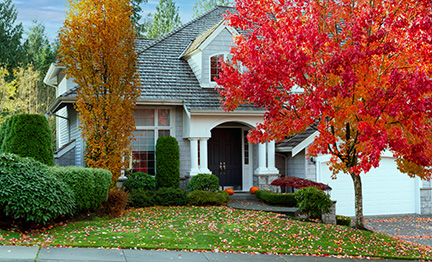
Fall landscaping doesn't always call for a complete revamp. In many yards, the biggest improvements come from well-timed decisions. To find out more, House & Home spoke with local experts who shared their knowledge on how to achieve a suitable landscape for fall.
 Start With the Basics
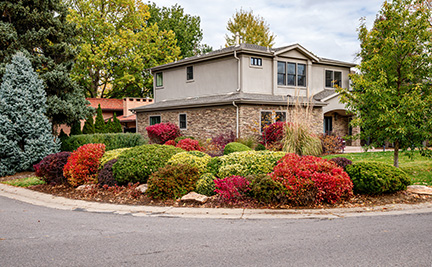
Before adding anything new, take care of the landscape's fundamentals. Fall is still an active growing season for both lawns and plants, and treating the yard as though winter has already arrived can create problems.
One common mistake is abandoning lawn care too early. Fall is also an important opportunity to overseed areas and repair bare spots before it's too cold for new grass to establish.
"Grass is still actively growing in September and much of October," says Chris DeMato, owner of Rock Bottom Landscaping. "Continue mowing as needed, and don't leave the lawn excessively long going into winter."
Fertilizer and mulch are also important in keeping a healthy appeal. Applying too much fertilizer can encourage unnecessary growth instead of helping plants. And when it comes to mulch, more isn't necessarily better. Two to three inches is generally sufficient, and mulch should never be piled against tree trunks and shrub stems.
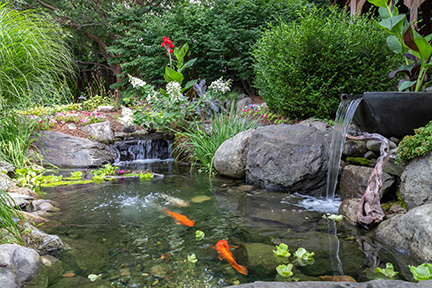
"Fertilize: You'll have a great impact on your plants right now," confirms George Mihalchick, owner of Ponds by George. "Adding character, which would be something decorative, in a planter in your garden that you can plant around is great as well."
 Prune With Purpose
Fall is a natural time to look at shrubs and perennials, but that doesn't mean everything should be cut back. Pruning is needed when fixing your landscape for fall, but the way you go about it matters.
"Cutting back shrubs and trees too heavily can remove next year's flower buds and encourage tender new growth before winter," DeMato states.
A specific type of pruning that can be used is deadheading. Once certain flowers have finished blooming, removing them can encourage additional flowering and keep the plant looking cleaner.
"One of the biggest mistakes I see is when homeowners have flowers like daylilies—they flower and then you don't deadhead them," Mihalchick says. "If you deadhead something once it's done flowering, nine times out of 10 you are going to get more flowers. People don't usually do regular maintenance on their plants, so it only blooms once."
 Think in Layers, Not Just Flowers
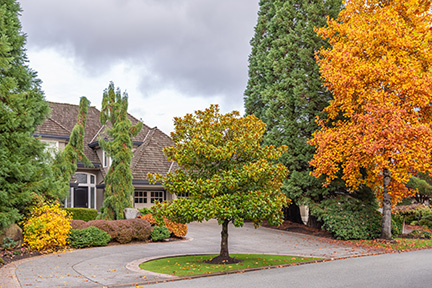
A landscape that relies entirely on flowers can lose much of its visual interest once summer ends. A layered design by contrast can provide homeowners with shape, texture and color as different plants move through their seasonal cycles.
The current preference for fewer plants with better placement works particularly well.
"For longer-lasting structure, boxwoods, hollies and evergreens provide the backbone, while ornamental grasses, hydrangeas and looser perennials soften the design," DeMato says. "Late-season perennials like sedum, coneflower and anemone extend color beyond the summer season."
Consider plants that also work well for the winter, as they become more interesting after their leaves disappear.
"There is a plant called variegated red twig dogwood," Mihalchick exclaims. "This has variegated leaves, and when it drops its leaves, its twigs turn brilliant red all winter long. So even to do those in a planter, to do those in your garden, do them where you can see them. They're gorgeous in the snow because they're bright red twigs that grow up from this plant, so it stands out."
Winterberry offers another strong seasonal feature. Once the foliage drops, clusters of red berries remain on the branches through winter, providing color and attracting certain animals.
"This plant will produce berries that turn red all winter, and the birds will come and eat them," continues Mihalchick. "It's a bush with red berries that's completely defoliated and it has brilliant red berries, just clusters of them all over the plant."
Make A Few Effective Changes
For homeowners who don't want to redesign an entire landscape, relatively small improvements can make a noticeable difference.
Lighting is one effective improvement as the days grow shorter. A well-placed light can highlight certain trees, architectural features or an entryway that can go unnoticed when the sun goes down.
"A relatively small change with a big payoff is adding landscape lighting, a few well-positioned uplights on specimen trees or the house can completely transform the property at night," affirms DeMato.
Most homeowners tend to overdo with seasonal decor, and one way to make sure everything's not overwhelmed is with structure.
"Use a piece of driftwood, put it in your garden, put it on anything that's going to give you structure," says Mihalchick. "A nice curving piece of driftwood adds a lot more attention than a plant."
The most successful fall landscape changes aren't necessarily about making a yard look more seasonal. They're about making decisions that work now and continue to work once the leaves are gone.
RESOURCES
Ponds By George
Southampton, Pa.
(215) 396-7500
PondsByGeorge.com
Rock Bottom Landscaping
Belle Mead, N.J.
(732) 873-6780
RockBottomLandscaping.net
Published (and copyrighted) in House & Home, Volume 26, Issue 4 (September/October 2026)
For more info on House & Home magazine, click here.
To subscribe to House & Home magazine, click here.
To advertise in House & Home magazine, call 888-202-5501.